
Battery energy storage
BESS: align energy storage with operating needs
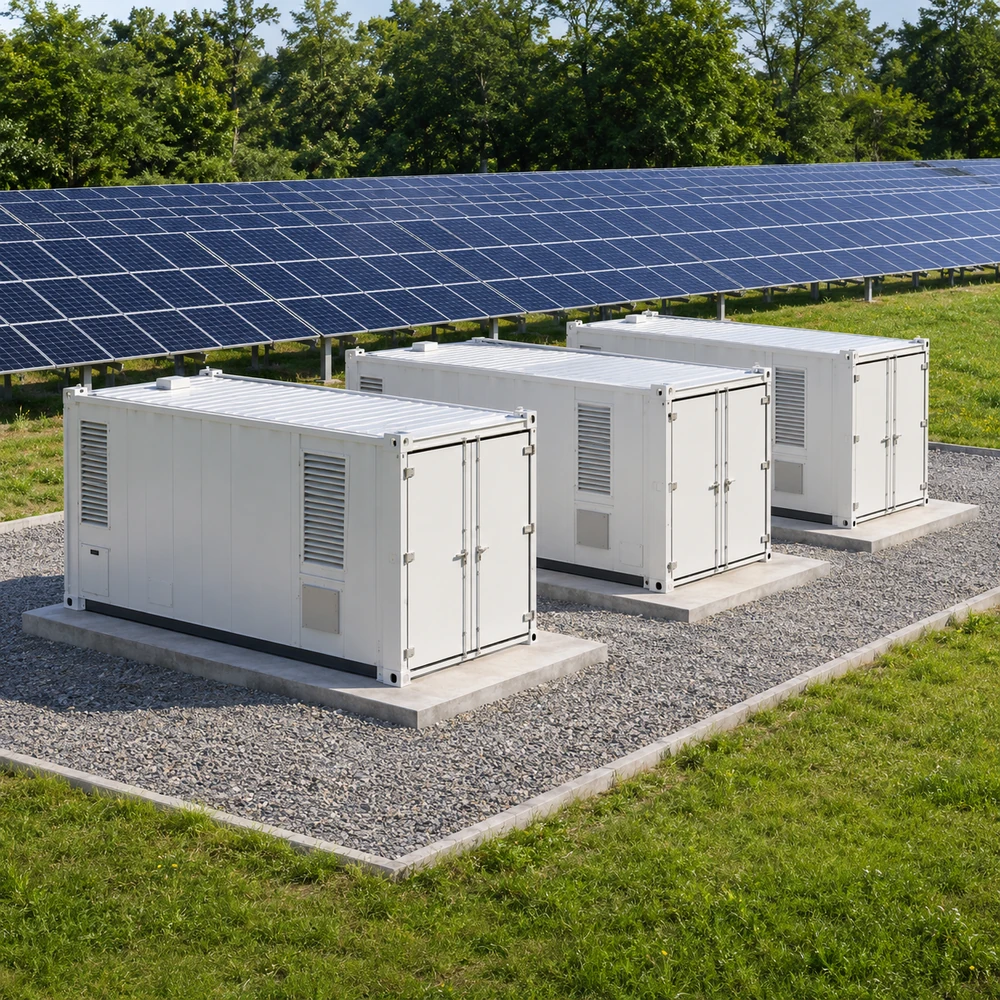
A battery energy storage system should serve a defined operating objective: coordinating solar generation, shifting electricity use or supporting critical loads.
Power and energy capacity are different
Power, usually expressed in kW or MW, describes the rate at which a system can charge or discharge. Energy capacity, expressed in kWh or MWh, describes the amount of energy stored. Both must be assessed alongside the operating profile, efficiency and equipment limits.
Define the application before choosing the system
Load data and the timing of solar generation help establish whether energy should be shifted between periods. Economic assessment should include investment, losses, maintenance, capacity degradation and the electricity pricing arrangements applicable to the facility.
Backup during outages requires specific design
Having a battery does not mean every load will remain powered when the grid fails. Critical loads, required duration, inverter capability, controls and protection must be defined. The transition between operating modes must be designed and tested appropriately.
Agree operational responsibilities
Installation location, environmental conditions, safety requirements, monitoring and response procedures need to be clear. In discussions with VNPLUS, site information and operating objectives provide the basis for defining an assessment with the relevant partners.